
Telegram Smart Automation: How Businesses Automate Marketing, Support, and Sales
Telegram is no longer just a messaging app. For many modern businesses, it has become a powerful platform for customer communication, marketing, and even sales automation. With over hundreds of millions of active users and exceptionally high engagement rates, Telegram offers something most channels can’t: direct, fast, and permission-based communication.
But manually managing messages, leads, and customer requests on Telegram quickly becomes impossible as your audience grows. This is where Telegram smart automation comes in.
Telegram smart automation allows businesses to automate conversations, workflows, and actions intelligently — not just with simple auto-replies, but with structured logic, real-time data, and AI-driven decision-making. The result? Faster responses, lower costs, and a better customer experience at scale.
In this guide, you’ll learn what Telegram smart automation really is, how businesses use it in real life, and why it’s becoming a core tool for growth-focused teams.
What Is Telegram Smart Automation?
Telegram smart automation is the process of using advanced automation systems to manage conversations, actions, and workflows inside Telegram — without constant human involvement.
Unlike basic Telegram bots that only respond to fixed commands, smart automation reacts to user behavior, message context, timing, and predefined rules. It can guide users through multi-step flows, collect data, integrate with external systems, and even make decisions automatically.
At its core, Telegram smart automation combines:
- Automated message flows
- Conditional logic (if/then rules)
- User data tracking
- Integration with CRM, payment systems, or databases
- Optional AI-powered responses
For example, instead of replying with a single static message, a smart automated Telegram system can:
- Ask follow-up questions based on user answers
- Qualify leads automatically
- Route conversations to the right department
- Trigger actions like sending invoices, updating CRM records, or notifying admins
All of this happens instantly, 24/7, without manual effort.
Why Businesses Are Moving to Telegram Automation
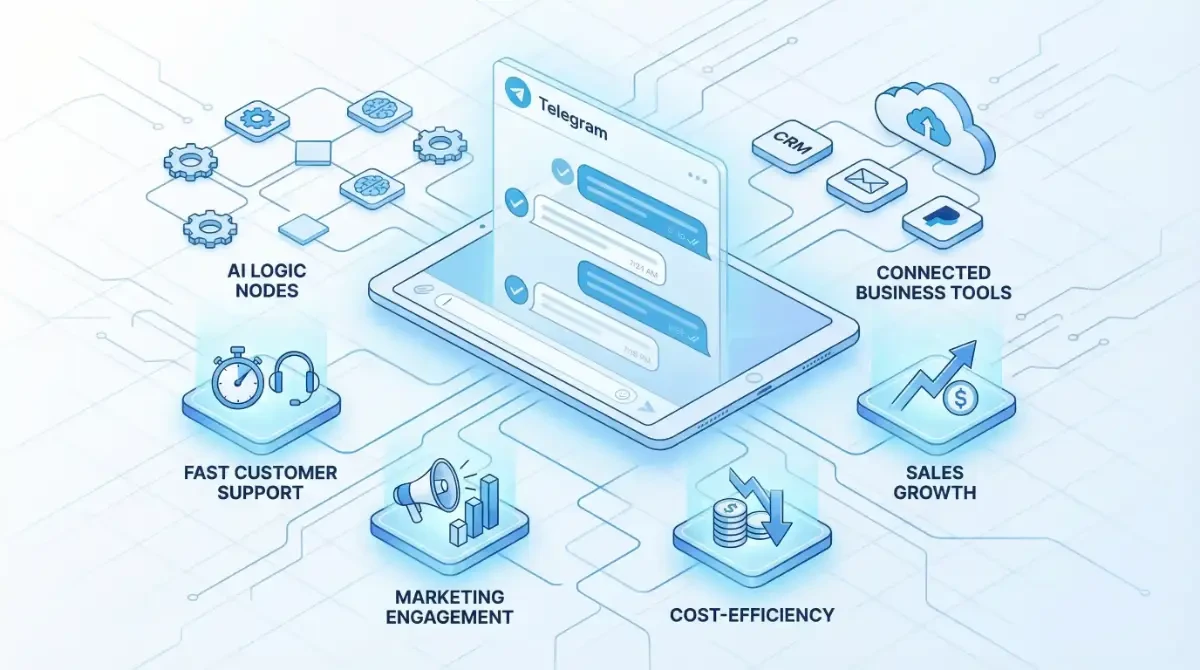
Businesses of all sizes are realizing the power of Telegram automation for several reasons. Automation not only saves time and reduces errors but also enhances customer engagement and improves operational efficiency.
Faster Customer Support
Customers today expect instant responses. With Telegram smart automation, businesses can:
- Reply instantly to frequently asked questions
- Route complex queries to human agents automatically
- Maintain 24/7 availability without hiring extra staff
Higher Engagement Than Email
Unlike email, Telegram messages have high open and response rates. Automated flows can:
- Send personalized messages
- Trigger follow-ups based on user behavior
- Re-engage inactive users automatically
Cost-Effective Solution
Hiring multiple support or marketing staff is expensive. Automation reduces manual workload and scales your operations without increasing headcount.
Real Use Cases of Telegram Smart Automation
Automation is only valuable if it solves real problems. Here are the most effective Telegram automation use cases for businesses:
Automating Customer Support
- Instant replies to FAQs
- Multi-step troubleshooting flows
- Routing to live agents when needed
Marketing Funnels
- Onboarding new users with automated welcome sequences
- Promoting products via scheduled campaigns
- Segmenting users based on behavior for targeted messaging
Lead Generation & CRM Integration
- Collect leads via automated forms
- Sync new contacts with your CRM system automatically
- Track lead engagement and follow up efficiently
Order Notifications & Tracking
- Send order confirmations and delivery updates automatically
- Notify users of special offers or product restocks
Community & Channel Management
- Welcome new members with personalized messages
- Moderate groups with automated rules
- Schedule posts or announcements in channels
Telegram Automation vs Traditional Chatbots
While many businesses rely on traditional chatbots, Telegram smart automation offers a more advanced and flexible solution. Traditional chatbots are usually static and keyword-based, meaning they respond only to predefined commands. In contrast, Telegram smart automation can understand context, follow multi-step flows, and react intelligently to user behavior.
Engagement is another major difference. Traditional chatbots often generate low interaction, while Telegram automation increases user engagement through personalized messages and behavior-driven triggers.
Integration capabilities also set them apart. Basic chatbots usually have limited connectivity, whereas Telegram automation can seamlessly connect to CRMs, payment gateways, analytics tools, and other business systems.
When it comes to workflow complexity, traditional chatbots are simple and linear, but Telegram smart automation can handle advanced, multi-layered flows with optional AI-powered responses.
In short, Telegram smart automation provides a smarter, more integrated, and scalable solution for businesses, especially those looking to enhance support, marketing, and sales processes.
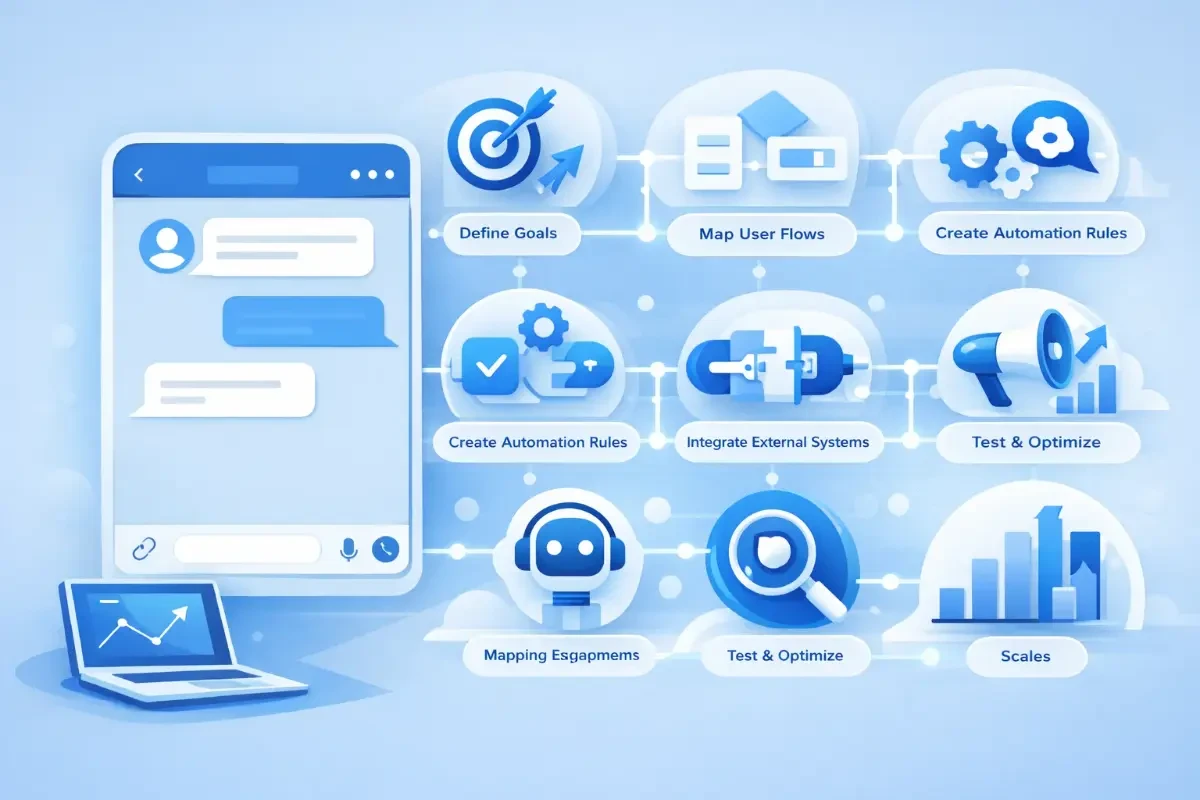
How Telegram Smart Automation Works (Step-by-Step)
- Define Your Goals – Identify whether you want to automate support, marketing, sales, or all three.
- Map User Flows – Plan each interaction step from greeting to resolution or purchase.
- Create Automation Rules – Use conditional logic, triggers, and AI responses for dynamic workflows.
- Integrate External Systems – Connect your CRM, payment platforms, or analytics tools.
- Test & Optimize – Monitor performance, analyze engagement, and refine your flows.
- Scale – Add more automation rules as your audience and needs grow.
This structured approach ensures maximum efficiency and engagement.
Is Telegram Automation Right for Your Business?
Telegram smart automation is ideal for:
- E-commerce businesses handling orders and customer queries
- Service-based businesses offering support or consultations
- Marketing teams looking for high engagement channels
- Communities, channels, or SaaS platforms seeking automated workflows
It’s not just about saving time — it’s about delivering consistent, professional, and timely communication at scale.